

By Markus Merin, Rackham Graduate School Environmental Storyteller Fellow
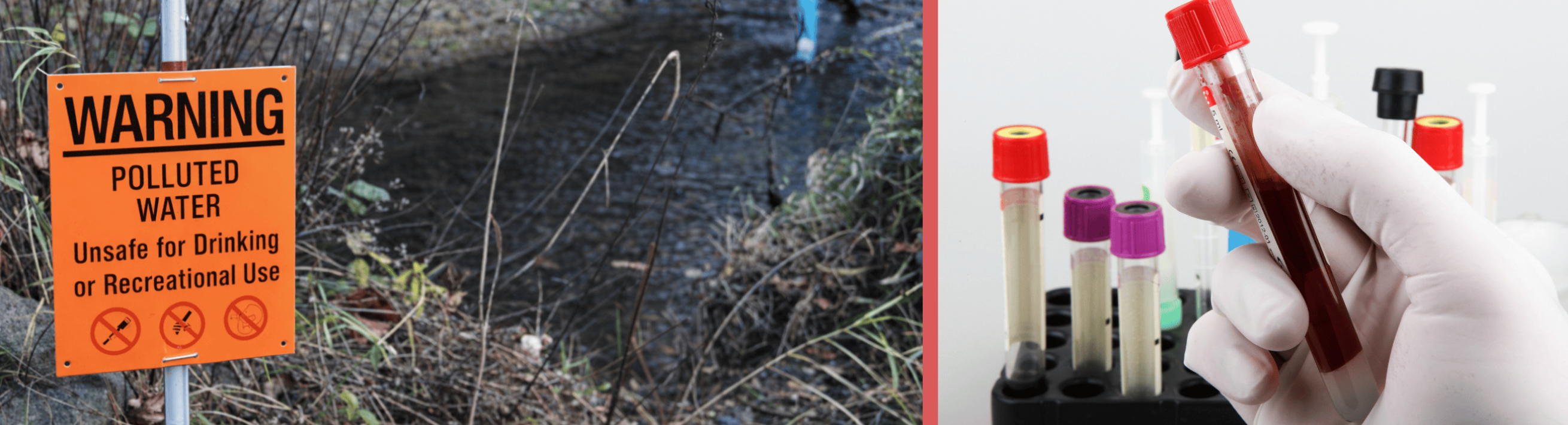
For years, West Michigan communities have struggled with high levels of PFAS contamination in their water supplies and soil. The Ecology Center has worked to educate lawmakers about PFAS harm to public health, and the health complications these substances can cause in children in particular. The Ecology Center and our coalition partner, the Great Lakes PFAS Action Network, supports Michigan Senate Bills 298 and 299, which would provide free blood testing for PFAS in children in three heavily-impacted West Michigan counties.
West Michigan’s Trouble with PFAS
Decades ago in the small town of Belmont, Michigan, tannery waste from one of the country’s largest shoe manufacturers, Wolverine Worldwide, contaminated groundwater for miles. Scotchgard, with its water-repellant properties made from toxic PFOS and PFOA chemicals, quietly leached into nearby household wells.
Per- and polyfluoroalkyl substances, or PFAS, are a class of some 15,000 manmade chemicals. Starting in the 1940s, PFAS have been used in countless products, from cosmetics and water-resistant clothing to firefighting foam and paint. While we might throw away the items they are used in, PFAS - commonly called “forever chemicals,” continue to contaminate our soils and water supplies, especially around industrial and waste sites. These chemicals build up stubbornly in our environment and have been linked to an increasing number of health problems ranging from high cholesterol to thyroid disorders and cancer.
The tannery waste site in Belmont closed in the seventies. But the PFAS chemicals remained in the groundwater and, consequently, in many families’ drinking water. Families spent decades unknowingly drinking contaminated water, and PFAS manufactures hid the fact that PFAS could build up in blood and lead to adverse health impacts.
Belmont’s struggle is far from unique. There are now over 300 identified sites in Michigan contaminated with PFAS. Drinking water is a major route of PFAS exposure, and the state estimates that around 15% of Michigan residents have been drinking water from sources contaminated by PFAS.
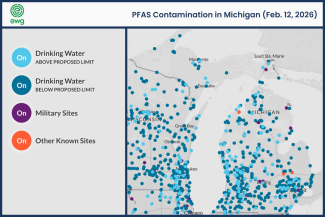
Across West Michigan, communities in Kent, Ottawa, and Kalamazoo counties continue to deal with considerable PFAS contamination in groundwater and surface water. Municipalities in these counties continue to pay for water filtration and testing.
Many people have endured thyroid disorders, cancers, and emotional stress. Local ponds are deemed unsafe for fishing.
Policy Solutions
Now, with the support of state coordination and resources, families exposed to PFAS in West Michigan have an opportunity to understand their blood PFAS levels more fully. In areas with known exposure, like Belmont, blood testing for PFAS can be the first step toward monitoring potential adverse health effects. However, PFAS blood testing is not currently covered by health insurance, and without state support and coordination to fill this gap, blood tests can cost $300-$600 per sample.
To address this, a bipartisan group of Michigan lawmakers introduced legislation in 2025 to establish a pilot program that would provide free blood testing for children in West Michigan counties impacted by PFAS contamination including Kent, Ottawa, and Kalamazoo. Parents would be able to work with clinicians to request blood testing for children potentially exposed to PFAS. The samples would be processed at the state’s testing lab and results shared with the parents. Parents would be given information on the health impacts of PFAS exposure and, with parental consent, blood samples could be shared with research institutions to continue investigation into the health impacts of forever chemicals.
The pilot program focuses on children because the long-term health effects of childhood PFAS exposure can be considerable. Exposure during fetal development and throughout childhood increases the risk of lifelong health issues for children. PFAS can impact bone development and increase the risk of osteoporosis. Hormonal disruption caused by PFAS exposure can alter the onset of puberty in girls. Immune dysfunction caused by exposure may lead to decreased vaccine efficacy in children.
Understanding PFAS levels in blood is an important part of medical monitoring for polluted communities. The National Academies recommends monitoring PFAS concentrations to inform clinical care of exposed patients.
The Ecology Center partners with PFAS-impacted communities through the Great Lakes PFAS Action Network. These communities are at the forefront to secure health-based care and peace of mind from further contamination. Affordable access to PFAS blood testing is a top policy priority for GLPAN’s community members. The Ecology Center supports the work GLPAN’s co-chair, Sandy Wynn-Stelt, has done to elevate this issue to Michigan lawmakers. The success of this pilot program could pave the way to expand testing for people exposed to PFAS statewide.
Michigan children exposed to PFAS contamination deserve medical care that can respond to their needs, and their parents have the right to know what’s in their child’s blood in order to make informed decisions about their medical care. Now, we need the legislature to take action on this critical health issue and support access to PFAS blood testing for children in West Michigan and eventually across the entire state.
Watch: PFAS Impact Stories from our Communities
Sources:
- Cincinnati Children’s Hospital Medical Center. PFA Exposure May Delay Girls’ Puberty.
- Minucci, Angela. Michigan issues 'Do Not Eat" fish advisory for PFAS in Kent County ponds.
- National Academies. Guidance on PFAS Exposure, Testing, and Clinical Follow-Up.
- Safer States. Science Review: PFAS, Covid-19, and the Immune System.
- Sen. Huizenga, Rep. Rogers unveil bipartisan PFAS testing legislation.
- Sigvaldsen, Annika, Erich Batzella, Christine Dalgård, et al. 2025. “Prenatal and postnatal exposure to perfluoroalkyl substances and bone mineral density in 9-year-old children from the Odense Child Cohort.” Environmental Research 286 (December): 122936. https://doi.org/10.1016/j.envres.2025.122936.
- Wynn-Stelt, Sandy. Wynn-Stelt: PFAS-impacted families deserve peace of mind. The Detroit News. June 29, 2025.