


Your Child Is Especially Vulnerable to Lead Exposure
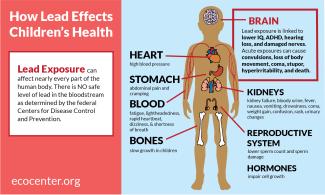
If your child has been exposed to lead, you may worry about how it could affect their development. Lead exposure in early childhood has been linked to.1
- Lower IQ
- Learning difficulties
- Reduced attention span
- Behavioral challenges
Research shows that some effects of early lead exposure can last into adolescence and adulthood. In one long-term study, children who experienced lead-related developmental delays continued to show lower cognitive performance as adults.2
Early Intervention Can Make a Difference
If your infant and toddler has been exposed to lead, early developmental support can help during this critical period of brain development. These services are designed to strengthen developmental skills as early as possible.
A 2022 study3 found that children who received early intervention services were:
- 14 percent more likely to meet grade-level math standards
- 16 percent more likely to meet grade-level English-language arts standards compared to children who did not receive services.
In Michigan, Early On intervention services may include: 4
- Occupational therapy
- Physical therapy
- Speech and language therapy
- Special instruction
Why Early Referral Is Especially Important in Michigan
More children (at ages 1 and 2 years old) are being screened for lead in Michigan due to the recent passage of Universal Testing. This means more families may learn their child has elevated blood lead levels, including children who might not show obvious symptoms.
This creates an opportunity for early--and vital--support. A prompt referral to Early On services from a doctor’s office can help lead-impacted families receive supportive services during a critical window of their child’s brain development.
Michigan Policy Solution
HB 5975 (Rep Joseph Fox): Lead-poisoned children (children with blood lead levels above 3.5 ug/dL) who are 3 years old or younger will receive an automatic referral to Michigan’s Early On program, so families receive timely developmental services and support. (Amends the Public Health Code)
Researched and Written by:
Olivia Halabicky, M.Sc., PhD, RN | University of Michigan, School of Nursing
References
1. Olufemi AC, Mji A, Mukhola MS. Potential Health Risks of Lead Exposure from Early Life through Later Life: Implications for Public Health Education. International journal of environmental research and public health. 2022;19(23). Epub 20221130. doi: 10.3390/ijerph192316006. PubMed PMID: 36498077; PMCID: PMC9741093.
2. Reuben A, Caspi A, Belsky DW, Broadbent J, Harrington H, Sugden K, Houts RM, Ramrakha S, Poulton R, Moffitt TE. Association of childhood blood lead levels with cognitive function and socioeconomic status at age 38 years and with IQ change and socioeconomic mobility between childhood and adulthood. JAMA: Journal of the American Medical Association. 2017;317(12):1244-51. doi: 10.1001/jama.2017.1712. PubMed PMID: 123487531. Language: English. Entry Date: 20170615. Revision Date: 20180424. Publication Type: journal article.
3. Stingone JA, Sedlar S, Lim S, McVeigh KH. Receipt of Early Intervention Services Before Age 3 Years and Performance on Third-Grade Standardized Tests Among Children Exposed to Lead. JAMA pediatrics. 2022;176(5):478-85. doi: 10.1001/jamapediatrics.2022.0008.
4. Michigan Department of Lifelong Education A, and Potential (MiLEAP),. Early On Michigan 2026. Available from: https://www.michigan.gov/mileap/early-childhood-education/early-learners-and-care/special-ed-05/early-on-michigan.