Founded in 1970, the Ecology Center serves one purpose: protecting healthy people and a healthy planet. We believe that the central question of our time is how human beings are going to thrive in the world without destroying the earth's ability to sustain us. This can only be achieved as a strong movement. Sign up to receive emails about ways you can get involved, take actions and learn about important updates from the Ecology Center.
The Ecology Center, with our partners in the Great Lakes PFAS Action Network (GLPAN), condemn the U.S. Environmental Protection Agency's (EPA) decision to roll back the country's first-ever drinking water standards for 'forever chemicals', endangering the health of Americans everywhere.
"Yesterday's decision by the EPA rolls back monumental science-based standards meant to protect our health. These actions will undoubtedly make the drinking water of millions across the country less safe," said Tony Spaniola, co-chair of the Great Lakes PFAS Action Network. "Communities in Michigan, like Oscoda, have grappled with toxic PFAS contamination for years. Rolling back the drinking water standards undoes years of progress to protect the health of these communities."
The drinking water standards were finalized in April 2024 and established legally enforceable individual Maximum Contaminant Levels (MCLs) for PFOA and PFOS at four parts per trillion (ppt), MCLs for PFHxS, PFNA, and GenX at 10 ppt. They set a Hazard Index MCL for chemical mixtures containing two or more of either PFHxS, PFNA, HGPO-DA, or PFBS.
PFAS or 'forever chemicals' are a widespread environmental hazard, and exposure to them is linked to numerous adverse health outcomes such as decreased fertility, delays in children's development, increased risk of cancer, and increased cholesterol levels. Unfortunately, due to widespread use and contamination, PFAS are found in our bodies, wildlife, waterways, rain, and even our blood. One of the largest sources of exposure is through contaminated drinking water. Unfortunately, the EPA’s decision to roll back public protections will continue to threaten our drinking water supply.
“The EPA has the fundamental role of creating and enforcing safeguards for our water. Today's action by the Trump EPA does just the opposite," said Sandy Wynn-Stelt, co-chair of the Great Lakes PFAS Action Network. "Drinking water contaminated with toxic PFAS chemicals is linked to numerous health impacts and threatens the health of communities in Michigan and beyond. We are calling on members of Congress to do everything they can to oppose these rollbacks and protect our drinking water from toxic PFAS contamination."
Not only does yesterday's decision eliminate the drinking water standards for all but PFOA and PFOS, it also extends the compliance timeline for those two chemicals from 2029 to 2031.
This decision will result in more PFAS in our drinking water and is a major setback in our pursuit to ‘Turn the tap off on PFAS.” Perhaps most egregious is that it comes from the agency whose sole purpose is to protect public health and the environment.
Read the press release and tell your members of Congress to show their opposition to the EPA’s announcement. It’s important they continue to hear from all of us about protecting our drinking water from PFAS!
By Yuki Nakayama, Ecology Center Environmental Storyteller Rackham Fellow
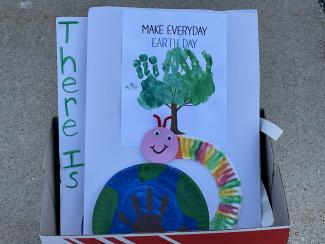
"Make Everyday Earth Day" Sign Made by Local Children
Earth Day, which takes place annually on April 22nd, was established 55 years ago in 1970 after American rose up to fight against the destruction of our beautiful planet. The same protests led to the founding of the Environmental Protection Agency (EPA) and the adoption of the Clean Air Act, Clean Water Act, and most of the country’s other major environmental laws. The April 22, 1970 protests were the biggest social uprising in human history.
Over the years, though, what was originally a day of protests and teach-ins has largely become an excuse for polluters to “greenwash” their products and operations. But not this year. Given the Trump Administration’s assault on federal environmental protections, Earth Day took back some of its original character.
“We only won our rights by fighting for our rights.” — Mike Garfield, Director of Ecology Center
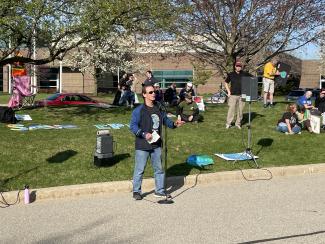
Ecology Center Director, Mike Garfield speaking at the rally
Ecology Center director, Mike Garfield, spoke about how the EC was conceived during the first Earth Day event to keep the energy of the uprising alive. He asserted that “we only won our rights by fighting for our rights,” and it is on us to continue that fight, especially now that EPA workers in the environmental justice department were recently told that they will all be fired by July. He urged everyone to continue to take a stand and raise our voices.
Photos of protestors from the Earth Day Rally
“We shouldn’t have to fight for clean water or air in the richest nation in the world.” - Rashida Tlaib
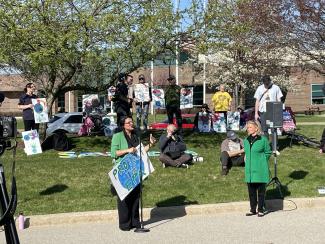
Rep. Rashida Tlaib stated that “we shouldn’t have to fight for clean water or air in the richest nation in the world.” While we face serious and urgent issues, she said that it gives her hope to see more and more Americans rising up. In her speech, she also gave recognition to those who may not be able to attend such events in person for various reasons, but taking action in ways they can to remind us that the collective efforts expand beyond those we saw at the rally.
Representatives Tlaib and Dingell at the rally
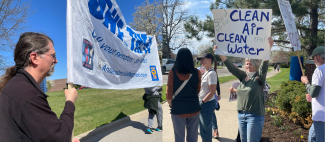
There were many local residents and community groups in attendance at the event including Ann Arbor Indivisible, a non-partisan grassroots movement to protect democracy. Gus Teschke, one of the organizers of the group, stated that though they do not work specifically on environmental issues, their work understands the importance of protecting regulatory agencies like the EPA and NOAA.
Left: Gus is holding up a large Save the EPA Banner. Right: Carla, another member of Ann Arbor Indivisible, holding up a Clean Air & Clean Water sign
“Taking care of the environment is taking care of people” — David, former EPA worker.
David was one of many retired EPA workers and former AFGE Union members that came out to the rally. He stated that while we cannot prevent the administration from making legal changes, he is concerned about the illegal and reckless actions. He also commented that we need the EPA because “taking care of the environment is taking care of people.”
Left image: Ruby local dog resident, who loves to swim, with a sassy sign. Right image: Hank, another dog resident, standing in front of a Honk 4 Clean Air sign.
What can we do?
Go to the Regulations.gov to leave public comments about the actions taken by the federal government and various agencies. This is one way that our voices can directly impact the course of action.
Write to your representatives to tell them why these regulatory agencies are important to your safety and health. The ACLU website has tips on writing to your elected officials. Find your elected representatives here.
The EPA has a helpful “How You Can Help” webpage on the various things we can all do in our households and communities to keep our environment clean.
Donate to organizations like the Ecology Center.
Attend our next EcoLive on May 20th on zoom: A in-depth discussion on Trump’s attacks on environment
Join us virtually on Tuesday, May 20th at 5:30pm for an in-depth look at the Trump administration’s moves, the impacts they've had so far, and how we can fight back. CLICK HERE to sign up.
The Administration’s attacks on environmental agencies and organizations and environmental regulations undermine the country’s environmental and public health protections. They also hurt major labs and institutes that conduct research and develop programs to protect our environment.
Speakers for this virtual event include:Jeff Alson, Retired Senior Engineer and Policy Advisor for EPA’s Office of Transportation and Air Quality, Ken Clark, President of AFGE Local 3907, representing federal employees, and Michelle Deatrick, Chair of Washtenaw County’s Environmental Council, Co-founder and National Chair of the DNC’s Environment and Climate Crisis Council
By Yuki Nakayama, Ecology Center Environmental Storyteller Rackham Fellow
“The expression ‘it’s just the tip of the iceberg’ is very apt here.” – Jeff Gearhart
We are learning more and more that microplastics are everywhere, even inside our bodies. New studies have found that not only do our brains have roughly a spoonful of microplastic, but they were also found in every human semen sample that was tested. The environmental and health impacts of microplastics have been warned by experts for over a decade. Already, we know that they can cause inflammation and oxidative stress, endocrine disruption, neurotoxicity, organ dysfunction, gut microbiome disruption, cancer, cardiovascular problems, and reproductive health issues.
Jeff Gearhart, Ecology Center Research Director, notes “the expression ‘it’s just the tip of the iceberg’ is very apt here.” These extremely small particles of plastic polymers in our environment pose unique challenges that make data collection and impact assessment difficult and time intensive. There is still more we need to know to find effective solutions to combat this pressing issue.
On February 12, 2025, the International Joint Commission (IJC) and the Great Lakes Science Advisory Board (SAB) organized a webinar on microplastics in the Great Lakes based on data collected by the IJC since 2010 (video of the webinar, presentation slides, and microplastics report.) The IJC was created by a treaty between the U.S. and Canada to influence regulatory decisions made by the two governments. The webinar on the Great Lakes gives us insight into what microplastics pollution is and how it is impacting our local water supply.
The IJC & SAB recommend regulations for monitoring microplastics. Specifically, they recommend that microplastics be included in the Chemicals of Mutual Concern (CMC) similarly to other chemicals like mercury to monitor and regulate them. The CMC is a list of chemicals under the Great Lakes Water Quality Agreement (GLWQA), that are monitored and regulated by federal agencies in both nations (like the EPA in the US). The GLWQA is a joint commitment to protect the Great Lakes by the two nations first signed in 1972. This addition to the CMC is a major development in addressing microplastic pollution in the Great Lakes region.
What are Microplastics?
Plastic is a relatively new material despite the fact that it has become so ubiquitous in our daily lives. Its commercial use increased in the 1950s, which means plastics have been around less than 100 years. People frequently view plastic as inert and harmless because it has become so common.
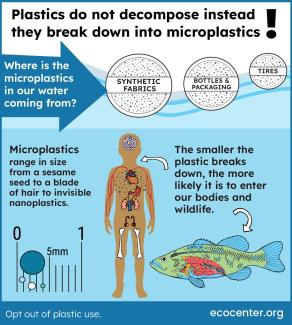
In the most simplistic terms, Microplastics are small particles of plastic from man-made materials. They are pieces less than five millimeters that are created intentionally (microbeads) and unintentionally (shed through degradation). Particles smaller than one micrometer that are unintentionally produced are frequently referred to as nanoplastics. Microplastics come from various sources that span from manufacturing plastics to daily products we use in our everyday lives such as single-use plastic products (e.g. plastic water bottles, food packaging, take out containers), tire rubber, and synthetic fibers in our clothes.
Due to their small size, they can be transported by wind, water, in and on bodies of animals. These plastic particles can be found all over the world in our environments (air, waters, food) and even in our own bodies. Some of the adverse effects of micro and nanoplastics have been reported, but we still do not know their whole scale. (Check out this website by scientists at Wayne State University that provide accessible infographics on microplastics.)
The two words, microplastics and nanoplastics, cannot be used interchangeably. Micro and nanoplastic need to be understood separately. The data we have so far on microplastics is uneven in terms of materials and size of particles. In many cases, nanoplastics are intentionally excluded from studies. This means findings about microplastics are not easily comparable and do not automatically give insights into nanoplastics. Therefore, we need more research into both micro and nanoplastics.
Alarming Levels of Microplastics
The data collected so far indicate an alarming presence of microplastics. One study found that yearly loads of 44,000-300,000 tons of plastics are already in North American agricultural fields where our food is grown (Nizzetto et al 2016). It is also known that toxic chemicals (like PFAS) and bacteria frequently stick to microplastic particles allowing them to spread widely and even become antibiotic resistant, which creates additional concerns.
In the Great Lakes, microplastics impact aquatic wildlife in two ways:
Plastics replace food in the gut of the fish or other organisms, leading to malnutrition and even death.
The particles move into the organism’s tissues (translocation) causing inflammation and oxidative stress.
Dr. Chelsea Rockman noticed that every fish in the Great Lakes had microplastics as opposed to one in four fish in the pacific ocean through her work in both bodies of water. This means the Great Lakes aquatic life is heavily impacted by microplastic pollution. Translocation refers to microplastics eaten by an organism moving beyond the gut. How this happens is still unclear, but data shows that it is happening. This raises serious concern about the impact of translocation on human health, especially in light of finding microplastics in our brains and semen.
Recycling Will Not Solve Our Microplastics Problem.
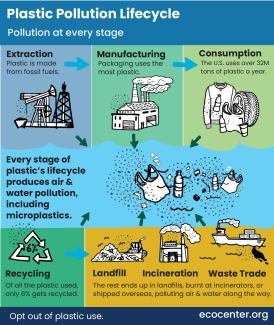
Plastic recycling programs are unfortunately not the solution to the microplastics problem.They do little to stem the tide of new plastic production. Plastics are not only used in packaging but in consumer and industrial goods, which all end up as waste at the end of their life cycle. Yet only very limited amounts–typically #1 and #2 plastic packaging only–are suitable for recycling. Most plastic waste is incinerated to create more energy. Between 1950 and 2017, over 9,200 million tons of plastics have accumulated across the globe including those that are still in use. Only 700 million tons have been recycled, while 1000 million tons were incinerated and 5,300 million tons were discarded into landfills. These numbers show the fate of plastic products. This is not to say that we should stop recycling, but it highlights the importance of product design and innovations that prevent plastic use in the first place.
Industry is the Biggest Obstacle For Tackling Microplastic Pollution
It is no surprise that one of the biggest obstacles in regulating plastic use and microplastic pollution is push back from plastics manufacturers, waste management companies, the oil industry, and the chemical industry. In particular, the oil industry is growing their profits by expanding their plastic production in anticipation of oil use declining as transportation fuel. Regulations on plastics and microplastics would place stricter producer responsibility on them to invest financially to design safer products with an awareness of their entire life cycle.
“[The solution] should not fall on individual consumers.” – Gillian Miller, Ecology Center Senior Scientist
The industry and consumers also need to be aware of the differences between critical uses and convenient uses of plastic. Gillian Miller, Ecology Center Senior Scientist, warns that the goal should not be to villainize all plastics and the solution is not as simple as completely eliminating plastic because it has many critical uses, especially in medicine and health care. She also emphasized that the solution “should not fall on individual consumers” and industry needs to be held accountable in reducing plastic across various commercial products, especially single-use plastics such as in bottled water.
The Big Takeaway from the IJC & SAB Recommendations
Develop a regional monitoring program: Already existing monitoring programs should be expanded to include microplastics to protect our crucial bodies of water.
Support continued research: Developments in tools and methods are still necessary to capture the whole scope of the environmental impact.
Add microplastics to the Chemical of Mutual Concern list: Adding microplastics to the CMC would require consistent and large-scale monitoring within the Great Lakes Region.
Enact policies that reduce plastic pollution: Regulating authorities should create stricter policies and standards that help reduce plastic production and use.
Mike Garfield, the director of the Ecology Center, noted that “the scale of what we are facing is vast. We need to come to grips with the fact that plastic use must be reduced” in order to make dramatic interventions. The Ecology Center is working with local partners to advocate for regulations and systemic solutions to this issue (More details in this interview by the WEMU).
The 2024-2025 State of Michigan budgeted two million dollars toward microplastics research. This is a crucial step in fighting microplastic pollution, but establishing stronger regulations is necessary to protect local food and water supplies.
Across the United States, there are statewide bans and restrictions of single-use plastic bags. However, California is the only state to have created a comprehensive statewide strategy to address microplastic pollution. In fact, California is considering adding microplastics as a contaminant in water, which would be a major regulatory move that could lead to more states implementing similarly strict regulations. In Michigan, there are efforts to repeal the ban on local single-use plastic shopping bags and to adopt a statewide microplastics plan similar to the one in California.
In addition to stronger policies, the industry needs to be held responsible for microplastic pollution created by their products. The Ecology is calling for Extended Producer Responsibility (EPR) laws and regulations that make product manufacturers liable for what happens to their products after use. Michigan needs strong EPR laws that include plastics reduction and reuse requirements, along with phase-outs of toxic chemicals.
State laws and local ordinances can make a difference to help build support for large scale systemic changes. While the problem we are facing is daunting, Melissa Sargent, Environmental Health Advocate at the Ecology Center, stated that “trying to take action on multiple levels is important. Working on all levels we can will build into a larger impact.” Like a domino effect, if enough municipalities take localized actions, it can lead to a state level action, that would then lead to a national, regional, and global level movement.
Becoming a Conscientious Consumer
Miller, Gearhart, Garfield, and Sargent, all stressed, the responsibility should be on industry and regulators more than on individual consumers. But there are some consumer level actions that can help reduce microplastic pollution and consumption. Conscientious consumer actions will influence the industry to take this issue more seriously as we show them what is important to us and our future.
Drinking less bottled water and not heating foods in plastic to reduce individual ingestion of microplastics (more info here).
Buy less plastic products and products with excessive packaging. Instead, purchase items made using non-plastic materials such as paper, glass, metal, and natural fibers (cotton, wool, and bamboo).
Support reuse programs and make efforts to reuse what we have by using reusable bags and bringing your own take-out containers to restaurants.
Do less laundry, put synthetic fabrics in a filtering bag, use products like the Cora Ball, and air dry your clothes.
Incorporate microplastics filtering tools and systems into your sewage systems.
Stay informed and participate in actions in your local community. The Huron River Watershed Council has a Take Action page that presents different ways we can individually and collectively take steps to keep our water clean.
Donate to the Ecology Center. Detailed long term studies as well as advocacy efforts require many people and ample funds to ensure the quality of the data that is collected.
Drivers who are thinking about going electric have a lot to consider. The Ecology Center’s own Mackenzie Monroe offers helpful tips for anyone thinking of making the switch.
Mackenzie Munro is the Ecology Center’s Environmental Education Director.
She lives in Williamston in Ingham County, a 100 mile commute round trip to her job in Ann Arbor. Mackenzie wanted to reduce her carbon footprint, but she wasn’t sure if an EV would be practical. A lot went into her decision, from purchase costs and ease of maintenance to the availability of charging stations.
“Ann Arbor has a plethora of charging stations,” Mackenzie says, so driving her EV to work is a cinch. But when she and her husband travel elsewhere, they have to plan carefully. “There are still a lot of dead zones. So places we look where we're going to vacation, we're like, we definitely cannot take our EV because there's no chargers around that specific area,” she explains. Another factor is the weather. “You might get your whole range that they advertise the vehicle as getting if it's 70 degrees and sunny, but when it's rainy or cold, that mileage can drop.”
After researching the wide variety of EVs on the market, Mackenzie decided on a used Hyundai Kona. But Michigan is keen on promoting its own vehicles so she would have to purchase her EV out of state. This added about $750 in shipping costs, but with the $4,500 rebate for a used EV it was still cost effective. She also had to budget $1,500 for the parts and installation of a Level 2 charger in her home that would allow her to fully recharge her EV overnight. As luck would have it, her brother-in-law is an electrician and saved her $1,000 on labor.
“Having that charger is absolutely amazing,” she gushes. “I actually really love my purchase. I love not stopping for gas.” While the environmental benefits are important, the bottom line for most consumers is cost. EVs typically save between $18,000 and $25,000 during the life of their vehicles compared to gas powered vehicles. Mackenzie reports that her car has not needed any repairs, and as long as gas prices are over $3 a gallon she’s saving a significant amount of money.
The thing she believes would spur EV adoption the most is to build more charging stations and repair the existing ones, “because it's the worst when you plan your trip and then you show up and it's out of commission.” She advises the wise traveler to plan ahead: “There's a lot of really great apps out there that tell you chargers that are working.”
Mackenzie Munro is delighted with her EV. But does she recommend them to others? The answer comes down to one thing: Location, location, location. This is a rallying cry for public/private partnerships to build out the EV charging grid. There are currently over 9,000 public EV charging stations in Michigan, but tens of thousands more are needed to make EV adoption practical across the state. The Trump Administration is attempting to claw back much of the $110 million that the National Electric Vehicle Infrastructure (NEVI) Program allocated to Michigan. In response, the 2025 budget includes $30 million to help fill the gaps.
In the late 18th century, viable electric vehicle prototypes went off course and for better or for worse, Henry Ford introduced the world to the gas powered automobile instead. Today, we have the chance to lead again by producing the world’s best EVs. But without the infrastructure to keep them zooming down the road, they won’t gain much traction with Michigan drivers.
By Yuki Nakayama, Ecology Center Environmental Storyteller Rackham Fellow
Ann Arbor Film Festival Poster and Michigan Theater
The Ann Arbor Film Festival is the longest-running experimental film festival in North America. It is also an Oscar-qualifying festival, meaning that award winners at the festival are automatically considered for the Academy Awards. Ecology Center is excited to be involved with the festival as a community partner — every year, we sponsor a screening of a film in competition that touches on environment related themes.
The film focuses on the Salton Sea in southern California. Although it is called a “sea,” it is the largest lake in California, located just south of Coachella and Joshua Tree National Park. The Salton Sea is most known for atomic bomb testing by the U.S. military during World War II. Currently, the Salton Sea and its surrounding areas are known for high levels of toxicity in the water and debris. Recently, it has also attracted attention due to the discovery of 18 million metric tons of lithium (roughly worth $540 billion) underneath the lake, which is a crucial material for green energy. This makes the Salton Sea one of the largest lithium deposits in the world.
The film gently unravels how humans and the environment are tightly intertwined. We impact the environment as much as the environment impacts us. It intricately weaves together the history and current status of the Salton Sea by including the history of bomb testing, the indigenous communities that live near and oversee the area, its impact to local environments, and its relationship to contemporary agriculture industry. The film is a story about the environment and all of the various people involved in its observation, preservation, and consumption. It shows us the ripple effects of human impact on the environment and its inhabitants.
“The Salton Sea has many stories. The atomic bomb testing is just one of them.” This statement, by a member of the Torres Martinez Desert Cahuilla Indians, captures the overall tone and approach of the film. It gives us snapshots of stories and developments the lake has witnessed over time. Punctuated by a group of tribal members singing traditional songs, the film connects the genocide of Native Americans in the 19th century to the ongoing destruction of native plants by the modern monocultural agriculture industry. The indigenous communities have also started to serve as safe havens for undocumented migrant workers, who have become a crucial part of modern farming. The tribal members continue to live in harmony with these sacred lands through its changes.
The members of the Torres Martinez Desert Cahuilla Indians perform a song and dance used in their rituals to send off those who passed away.
There appears to be a never-ending cycle of environmental and health harms caused by evolving socio-political interests. The toxicity of the lake’s water is largely due to the heavy metals, chemicals, and radioactive materials deposited by the U.S. military during World War II and the Cold War, as the debris and materials from tested bombs remain in the lake and its surrounding areas. The accelerating climate change is causing the water level at the Salton Sea to decrease at an alarming rate, with little investment by those in power to save it. The highly toxic dust from the lake can also spread by the wind to residential and agricultural areas, raising major concerns.
The film uses point-of-view shots throughout, providing us with unique perspectives on the stories of the Salton Sea. We are not allowed to sit back and be passive observers; these shots compel us to be aware of our complicity in the history and current status of the lake, as well as the political and environmental conditions beyond it.
With the recent discovery of Lithium, the Salton Sea will attract increased military, political, and business interests, as the lithium reserve is large enough to meet all domestic lithium needs without importing from China. There are plans for a “Lithium Valley” in California to develop a lithium industry, but new industrial developments raise new environmental concerns, such as the impact to local water supplies and other issues.
Among the Palms the Bomb uses a micro view of the Salton Sea as an entry point to examine the macro issues that continue to impact environmental and human health on a larger scale. The Salton Sea’s stories are not unique to this area. There are many other contamination sites across the US that continue to require our involvement, including right here in Michigan such as Ossineke GroundWater Site, Groundwater in Traverse City, Verona Well Field and many more (more information about other contaminated sites in the US available on EPA’s Website). The film’s power lies in the way it reminds us about the universality of the entangled interests and realities that influence possible solutions.
Trump Moves to Undo Climate Policies, But Barriers Remain
President Donald Trump has signed an executive order to withdraw the U.S. from the Paris Climate Agreement — his second such action — while aggressively pushing for fossil fuel expansion and dismantling Biden-era climate initiatives. Declaring an "energy emergency," his administration is fast-tracking oil and gas drilling, including in protected areas like the Arctic National Wildlife Refuge, and seeking to roll back federal support for electric vehicles and clean energy.
However, despite Trump's "drill baby drill" rhetoric, significant barriers prevent sweeping changes to U.S. energy policy. Slow government processes, market forces making new fossil fuel projects less profitable, and legal challenges all limit immediate action. Additionally, the Inflation Reduction Act (IRA) continues to provide substantial economic benefits, particularly to Republican-led congressional districts, making it politically challenging to reverse. Though clawing back committed federal funds or undoing congressionally passed legislation requires an act of Congress, the Trump Administration and its allies in the Congress appear to be moving ahead with those plans.
Progress for EVs Under Biden
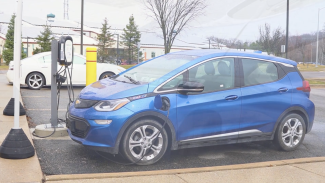
Avalon Housing is host to EV car sharing program where people can rent this electric vehicle on an hourly basis.
The transition to electric vehicles (EVs) surged ahead under the Biden administration. The number of public charging ports more than doubled from 2021 levels, with nearly 1,000 new stations coming online weekly. This rapid expansion has made EVs more accessible to consumers nationwide. Biden’s policies also drove record-breaking EV sales. In 2023, 1.5 million passenger EVs were sold in the U.S., a 50% increase from 2022. Over a vehicle’s lifetime, an EV owner can save between $18,000 and $24,000 on fuel and maintenance
The transition to electric vehicles now faces significant roadblocks. The Trump administration has rolled back key policies supporting clean transportation. The administration revoked a federal goal for 50% of new car sales to be electric by 2030, froze funding for EV charging infrastructure, and proposed eliminating the $7,500 federal tax credit for EV buyers. Further, Trump ordered his agencies to roll-back federal emission and fuel economy standards, and moved to rescind state emission waivers that allow states like California to set stricter pollution standards. This will slow EV innovation and allow gas-powered cars to remain dominant. These actions prioritize fossil fuels over clean energy, threatening progress toward a sustainable transportation future. Notably, Tesla, with its established market presence and domestic manufacturing, could gain a competitive edge as rivals face increased costs and reduced incentives.
Despite these federal setbacks, the push for EV adoption continues at the state level, and Michigan stands to benefit from leading the charge.
Michigan’s Stake in the EV Transition
As the heart of the U.S. auto industry, Michigan has more to gain — or lose — than any other state in the EV transition. Auto manufacturing is Michigan’s top industry, employing 18% of the nation’s auto workforce. While Michigan leads in EV-related jobs per capita, other states are quickly catching up, while China and the European Union lead the world in EV production and adoption. Michigan needs federal investment to stay at the leading edge of the global transition to EVs.
Gabriela Santiago Romero, Detroit Council Member District 6, Speaks Out at Climate Can't Wait Rally
Gabriela Santiago Romero is the council member for District 6 in Detroit, an area that has high unemployment and is heavily polluted by truck traffic. She is angry that programs to build battery plants and incentives to transition diesel powered trucks to EVs are now on hold. “There were a lot of opportunities to think about how we turn over from old fossil fuel to new energy, and that is at a standstill right now,” she laments. “So cutting back on that is also scaling back on job opportunities for Detroiters.”
Detroit is continuing to invest in the EV transition, using a variety of funding sources to install chargers in key locations like parks and public lots where home charging isn’t an option. Community-based EV car-sharing programs are also expanding access, ensuring that clean transportation benefits all residents, not just those who can afford a personal EV.
Governor Gretchen Whitmer has recognized the urgency of staying competitive. The Michigan Healthy Climate Plan (MHCP) aims for two million EVs on Michigan roads by 2030, but without federal funding, that goal will be hard to reach. The state’s 2025 budget included $30 million to fill gaps left by federal and utility programs, but that one-time funding is just a drop in the bucket.
The environmental and health stakes are just as high. Michigan’s transportation sector accounts for 32% of the state’s greenhouse gas emissions, with 58% coming from passenger vehicles and light-duty trucks. A University of Michigan study found that EVs reduce lifetime emissions by 64% compared to gas-powered cars.
For communities like Detroit, where air pollution contributes to the highest asthma rate in the country, transitioning to EVs isn’t just about climate — it’s about public health. Cutting vehicle emissions will mean cleaner air and lower healthcare costs, especially in neighborhoods disproportionately affected by pollution.
The Road Ahead: Michigan Must Lead
With the federal government rolling back EV-friendly policies, Michigan must take the lead in securing its economic and environmental future. EV have so many benefits: lower long term costs for drivers, creating high-paying jobs, reduced pollution, and a strengthened Michigan’s auto industry. The biggest drawbacks for consumers are the scarcity of charging stations in some areas and the comparatively high sticker price of EVs. But with strong investment in charging infrastructure, consumer incentives, and public education, we can get there.
If Michigan wants to remain at the epicenter of US auto manufacturing, the state must not only build EVs but ensure its residents drive them, too. The transition is happening — Michigan has a choice: lead or fall behind.
Avalon Housing Rideshare Program
Avalon Housing provides safe, supportive housing and wraparound services as a long-term solution to homelessness. We spoke with Assets and Compliance Manager Joel Barson to learn more about the organization’s new electric vehicle (EV) rideshare program at Carrot Way Apartments.
“A rideshare program is very important for a community like this because low-income folks often face hurdles when it comes to transportation,” Barson explains. “Even though there is a convenient bus stop, it can still be a challenge—especially for things that can’t easily be maneuvered on the bus, like groceries.”
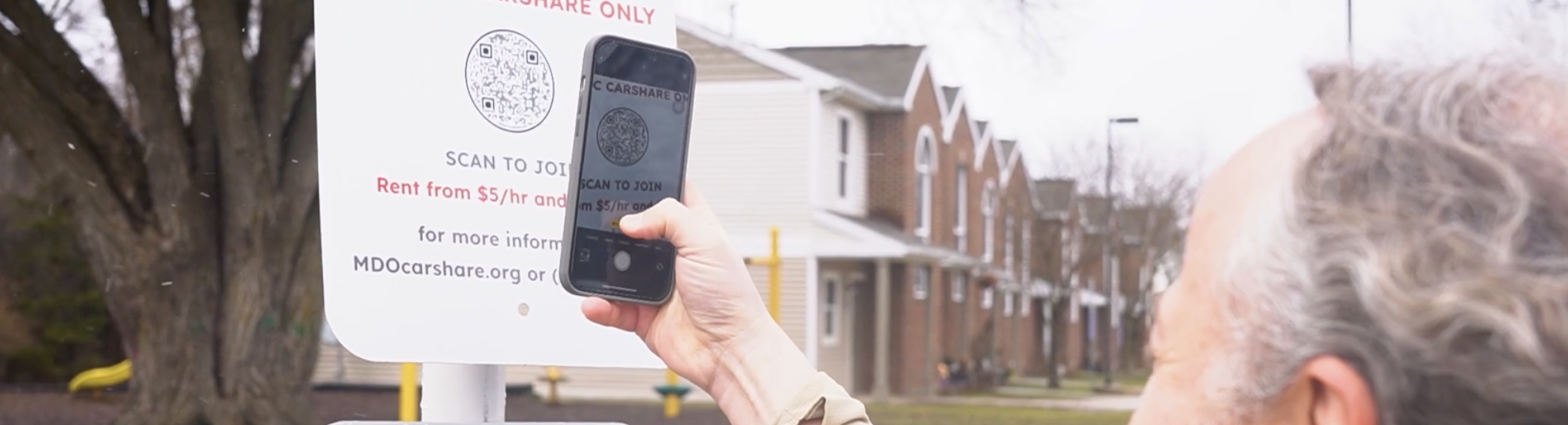
Rideshare users pay a flat fee of $5 per hour or $50 per day, and they do not need to pay to recharge the vehicle, making it an affordable alternative to services like Uber or Lyft. “It’s more than competitive in the rideshare market,” Barson notes.
The EV at Carrot Way has been in use since the spring of last year and has already logged over 12,000 miles and more than 2,300 hours of use by dozens of residents. “It has given them another option besides the bus—especially for traveling beyond the immediate Ann Arbor area,” Barson says.
Oregon-based nonprofit Forth Mobility manages this and other EV rideshare programs across the country, supported by funding from a federal Department of Energy grant that is now under threat. Due to the program’s success, Avalon has expanded it to two other properties, and may grow it further. Barson adds that the Ann Arbor Housing Commission has also launched a similar EV program at Baker Commons through the same grant.
The program’s environmental benefits are just as important as its affordability. “We’re excited about the EV program because it’s where we’re going in terms of sustainability. We want to be mindful of the environment,” Barson says. “We hope this supports our communities in both independence and in caring for our planet.”
By Yuki Nakayama, Ecology Center Environmental Storyteller Rackham Fellow
If you have any interest in any hobby or activity, now is the time to get started and connect with your local community groups!
One of the major elements of practicing More Life, Less Stuff is extending the life of the objects you already have. This means repairing or mending things as necessary. When the pandemic came in full force in 2020, I decided that I would do my best to not purchase any new clothes until the pandemic was over. I did not want to add to the workload of essential workers like delivery drivers by ordering things online. I also wanted to cut the temptation for retail therapy because online shopping is so easy, but can have financial and environmental impacts. This solo “no-buy” challenge was easier to do during that time since I was not seeing anyone in-person and there wasn’t any pressure to look nice, but I have managed to continue it. (Read one of our past articles on No-Buy challenges)
What started as a no-buy challenge led to reaffirming the joy and excitement I experience when I engage in a craft like sewing or mending. I grew up with family members who have creative hobbies like quilting, knitting, and crocheting. Both of my grandmothers were well versed in Japanese and Western methods of sewing. The yukata (a summer Kimono) I still wear every summer was hand sewn by my grandmother. I also have sweaters that my great aunt knitted in the 90s that are lasting longer than the mass manufactured clothes I bought more recently and they always get complimented on how beautiful they are.
Growing up, I was always encouraged to pursue creative projects and classes. I started my first sewing class when I was 10 years old. Despite the fact that I grew up sewing and with a family with many creative hobbies, it fell to the sidelines as my life took on new interests and challenges. I currently do not own a sewing machine and need to sew by hand, so my sewing ideas and projects got filed under “when I have time and a sewing machine in the future.” I rarely got around to them.
The water bottle cap used in place of a darning mushroom and the end result of Yuki's first darning project
While I had sewing experience, darning was new to me. I purchased my first darning needles to practice mending on some old socks with holes (pictured left). I bought my darning needles and yarn at a local shop called Spun in Kerrytown. The people that work there were helpful and friendly, and they told me about classes and community meetings that they host for people who like to knit and craft — a whole local community I wasn’t aware of before. A few days after I purchased my new tools, I stopped by the store during my weekly shopping trip in Kerrytown because I was eager to show someone how my first darning project turned out. They gave me the biggest smile and praise for what I accomplished, which made me so happy.
In most tutorials, they tell you to buy a darning mushroom, a wooden object that helps to stretch and secure the fabric so you can mend it. While Spun had the needles, they didn’t have the mushrooms in stock, so I used the cap of my Klean Kanteen water bottle as a makeshift darning mushroom (pictured right). It’s been a few years and I still don’t own a proper darning mushroom or a loom. I continue to use the same bottle cap or any other object that fits my mending needs. This isn’t to say don’t buy the mushroom, because I absolutely want one. It can feel like you need to buy all of the gadgets and tools when starting a new hobby, but it’s not always necessary — you can start with the bare minimum. I probably could have started without the darning needles since I already have other sewing needles.
What I discovered was not just a way to save my clothes from the trash or a new skill, but a community of people who are excited to welcome new people to experience mending and crafting together. The mending and crafting community at large has provided a safe and positive environment for me. The interest alone was enough to gain access and many were eager to help out beginners and share the joy.
When the Ecology Center asked me for story ideas for the More Life, Less Stuff series, I had to mention mending. It encapsulates the “More Life, Less Stuff” philosophy so much to care for your clothes and to enjoy them in the various stages of their life. I have mending projects that I am too embarrassed to include in this article, but the quality does not matter, especially as a beginner. You can always start small on clothes you only wear at home. It is such a good lesson in giving yourself grace, not forcing perfectionism on yourself, and being a witness to your own journey. Improvement is not required — it may or may not happen, but that’s okay. It’s all about taking a moment to think about the objects you own and incorporating a practice of not throwing something away without considering a way to repair, mend, or to reuse creatively.
Mending also saves money. I want to be honest and realistic about how this is a major motivation for my mending practice. The individual and collective financial reasons and impacts should not be ignored. If being mindful of environmental health also helps ensure my financial health, it is a big win. Centering your life is about thinking about how you spend your money and time in ways that reduce harm and increase well-being. As we see product prices rise, mending can help our wallets while making an environmental impact for our collective health.
If you have any interest in any hobby or activity, now is the time to get started and connect with your local community groups!
Sewing Classing & Machines at Ann Arbor District Library
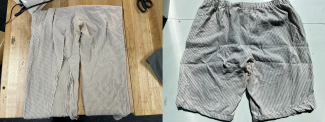
As I was researching local resources for mending, sewing, and other forms of crafting for this article, I remembered that the Ann Arbor District Library always has wonderful classes and workshops (AADL Events). I took this opportunity to attend one of them called Sewing Lab at the Downtown Branch. I ripped a pair of pajama pants almost a year ago (in the most ridiculous way possible) and wanted to turn them into shorts, but had not yet gotten to it. This was the perfect opportunity for me to finally get this project off my long to-do list while fulfilling my duties for the Ecology Center. I hadn’t used a sewing machine in 10 years, so it was nice to get a refresher and be able to ask questions to an expert. I had such a wonderful time, I will definitely be back for the next sewing lab!
Sewing Lab is one of many FREE workshop series that the AADL organizes. This lab meets every two weeks at the Downtown Library’s Secret Lab (in the basement) and is open to Grades 6 to Adult (young children must be accompanied by an adult). You do not need to sign up for the class, pay any fees, bring any tools, or even have a library card. They provide all of the tools so you just show up with an interest in sewing. This is possibly the best deal I have ever seen on learning the basics of sewing. While each workshop has a specific theme that the instructor will do a demonstration of, the Sewing Lab is just a day where people can come to use the sewing machines available at the library, to get some advice from an expert, and/or to just be in community with people.
You’re welcome to bring any type of project you are working on, and people of all levels are welcomed. You can use a sewing machine for the first time, work on your personal projects, or simply be present. You are not required to use a machine or have a project. You can simply observe if that feels the safest way for you to enter this space and activity. You can come alone or with friends. The instructor and the staff will show you how to use a sewing machine even if you’ve never used one before.
"The Sewing Lab [at the AADL] is open to everyone!” -Rae Hoekstra and AADL
Rae Hoekstra, one of the sewing instructors along with Amber Adams-Fall, said that she wants more people to know that the Sewing Lab is open to everyone at any point in their sewing journey (Rae also offers free patterns and tools on her website). The library staff I talked to also noted that the Sewing Lab is just one of many Arts & Crafts events that the library offers every month across their branches and welcomes people to look on their website or to pick up the free monthly schedule available at the library. The Next Sewing Lab session is on April 28th from 6pm to 7:30pm with Amber. She will be demonstrating rolled hems.
The sewing machines at AADL
The sewing machines can be found on the second floor of the AADL (at the downtown branch) in waterproof hard cases with wheels.
I was not able to finish both legs of the pajama pants during the Sewing Lab time, so I checked out a sewing machine to take home. The AADL has many types of tools that can be checked by library card holders. The sewing machines come with everything you need inside a weather proof container. During the week I had the sewing machine, I finished my pajama pants and did other sewing projects I had previously put off because I didn’t want to hand sew. I regretted not borrowing a sewing machine from the library sooner!
Mended pajama pants before and after
Local mending and crafting groups:
Here are different ways to start your mending, sewing, and crafting journey while connecting with the local arts & crafts community.
Argus Farm Stop’s Packard Cafe has a weekly sewing club every Monday from 6 PM to 7:30 PM that is FREE and open to the public. You can learn to repair, repurpose, and restyle your clothes.
Maker Works has crafting classes and crafting tools available for use in their shop. They also have a regular repair lab called Fix it Fridays if you have anything that requires repair.
There is a Google map list of fabric shops around the world focusing on small businesses to source your materials from.
Check out our video story about Microplastics in our water and how your clothing habits can contribute:
It's Michigan's budget season, and we are calling on our state representatives to put Michiganders' healthy future first when creating its budget.
Michigan needs a budget that supports community resiliency as energy costs rise and the impacts of climate change worsen. We must invest in better energy efficiency, cleaner air, and sustainable transportation by reducing heating costs, updating homes, and expanding electric vehicle (EV) charging.
The Home Electrification and Appliance Rebates Program will help Michiganders access safer, more affordable heating options. In addition to its widespread benefits, this program will lower energy bills and improve air quality for the 327,000 rural households relying on delivered fuels.
Improving the Low-Income Home Energy Assistance Program will allow more families to weatherize their homes and save energy money while promoting long-term energy security.
A significant investment in EV charging and transportation will help position Michigan as a national leader in clean transportation, ensuring all communities, including rural areas, have access to EV technology.
We must continue our commitment to workforce development by supporting the Going PRO Talent Fund. This funding will equip our workers with the necessary skills for high-demand jobs in the EV and clean energy sectors, fostering innovation and economic growth.
Finally, we urge an increase of $50 million to bolster local bus operating funds, ensuring that all Michiganders have access to work, food, schools, and healthcare across all 83 counties.
Together, these investments represent a commitment to the future of Michigan—one that prioritizes energy efficiency, economic opportunity, and environmental health for all.
FY26 Budget Priorities Facts
Reducing Heating Costs for Rural Michiganders ($5 million – EGLE)
Adding targeted funding to the Home Electrification and Appliance Rebates Program housed in EGLE will help more families in rural communities cover upfront costs associated with switching to safer, more affordable heat sources.
This investment will reduce energy bills, improve air quality and benefit Michigan’s 327,000 households, many of which are located in rural areas, that rely on delivered fuels for heating and cooking.
Families who depend on delivered fuels like propane face higher costs and increased indoor health risks compared to those using electricity, research shows.
Helping Families Update and Weatherize Their Homes to Save Money and Conserve Energy ($10 million – MDHHS)
Shifting a greater share of existing Low-Income Home Energy Assistance Program (LiHEAP) federal energy assistance funds toward weatherization will help address rising energy costs for many families.
This will also encourage updates and weatherization of older homes to put money back in families’ pockets and conserve energy.
Increasing Michigan’s allocation from 10% to the full 15% allowed by law will provide savings for families, reduce reliance on short-term crisis assistance, promote long-term energy security and provide homeowners with greater self-sufficiency.
Expanding EV Charging and Fleets ($45 million – EGLE)
Proactively funding EV infrastructure and fleets helps Michigan stay competitive with other states, fills gaps in federal funding and helps position the state as a national leader in clean transportation.
This investment builds on Michigan’s ongoing efforts to grow EV charging accessibility, leveraging the existing Clean Fuel and Charging Infrastructure Program within EGLE and expanding it to include vehicle grants.
Expanding charging networks and clean fleet funding ensures rural areas, multifamily residents and small businesses have the same access to EV technology, reducing transportation costs and improving air quality for all communities.
Supporting the Going PRO Talent Fund
Continued investment in the Going PRO Talent Fund ensures workers gain the skills needed for high-demand jobs in the EV and clean energy sectors, keeping Michigan at the forefront of innovation.
Funding helps small- and medium-sized businesses train employees through on-the-job training and apprenticeships, building a strong talent pipeline while creating and retaining good-paying jobs.
Supporting the Energy Revolving Fund ($5 million - DTMB)
The Energy Revolving Fund will support transitioning the state’s fleets to electric vehicles.
The revolving fund also provides resources to support strategic investments by state agencies in clean energy technology, renewable energy and initiatives that reduce energy costs.
Supporting the State Fleet Transition to Electric ($1 million - DTMB)
Transitioning the state fleet to EVs reduces fuel and maintenance costs, leading to long-term savings for taxpayers while improving government efficiency.
Investing in state fleet electrification supports local EV manufacturers, charging infrastructure providers and the broader clean mobility supply chain, strengthening Michigan’s economy for years to come.
Investing in Local Bus Operating ($50 million increase to $276 million total - MDOT)
Investing in Michigan’s full transportation system (buses, trains, senior services, ferries, pedestrian and bicycling infrastructure, etc.) will enable all Michiganders as they go to work, school, doctor’s appointments and more, even if they can’t drive or their car breaks down.
This investment will support all 77 public transit services in all 83 Michigan counties which together provide more than 45 million rides each year.
MDOT has allocated a portion of state gas tax funds to local public transit for 75 years. This increased investment restores that support, addressing increased costs and needs local agencies are facing and preventing shut downs of essential local services.
By Crystal Zanders, More Life, Less Stuff Freelance Writer
I spent most of 2024 stressed out — it felt like one thing after another. Luckily, everything has worked out, but dealing with it gave me a new perspective on stress.
There are a lot of things in life we have no control over. When bad things happen, we choose how we are going to respond. I have learned to identify the energy-wasters in my life and to do what I can to declutter my mind so that after I deal with the real problems, I have more space and energy to live my life and experience joy. More joyful life, Less joyless stuff.
While reading online forums about having less stuff, I learned about digital decluttering, a relatively new concept. I realized that much of the time I spend using technology is ‘energy-wasting’ instead of ‘joy-bringing.’ So, I am starting my decluttering process there.
To be clear, I am not anti-technology. There are some ways that it helps us create a better, more enriching, more fulfilled life. I work remotely and live far from many of my friends and family. I am very grateful for current technology because not only does it enable folks with disabilities to live fuller lives, but it also allows us to connect with each other. However, it can also distract and disrupt life.
This isn’t about judging folks or myself for using technology but about making sure the technology is bringing life, not just more stuff.
So, how do we optimize the use of technology to create more life? How can we be purposeful about when, where, and why we use it — so that we are using it, it isn't using us?
Ask yourself, how much time are you spending in digital spaces?
Before I could begin to declutter, I had to stop and take stock of how much time I was spending in digital spaces and what I was doing during that time. Luckily, my phone tracks that for me.
Due to health issues, I spent the holidays alone. So, I spent more time using technology. I want to make sure I am spending my unstructured time doing things that matter to me. For example, I spent almost eight hours on my phone on New Year's Day.
Four hours were spent on calls and texts to and from people I care about. For me, connecting with them was a good use of technology. However, it might not have been such a good idea if I had been surrounded by family and/or friends in person. So, be sure to consider the context.
I spent another hour on YouTube. Since I listen to news and documentaries on YouTube while walking my dogs, I consider that an hour well-spent. I was outside getting fresh air and exercise, a positive use of time and technology.
The last three hours of my screen time were split between an online game and social media. I see my online gaming as neutral. It helps me relax. Some people knit; I play merge games. Learn more about healthy gaming.
That week, in addition to my groceries, I bought some dog toys. I felt guilty because, in an attempt to buy less stuff, I gave my dogs last year’s toys for Christmas. When you put a dog toy away for a few months, then bring it back out, dogs treat it like a new toy. Now that I think about it, I wonder if my guilt came from me or from the daily emails that I get from the pet supply store. Was this my idea, or was it a result of the targeted ads that I see all the time on social media because I have purchased dog food online?
My relationship with social media is more complicated because some of my time there is associated with my work. I use Facebook to network with writers around the world; LinkedIn is where I connect with other academics; I do some of my research on Reddit.
On New Year's Day, however, I was just reading and watching random things. I spent time watching a video of a dog hopping through the snow over and over again. I read comments to see how "the internet" responded to the news of a reality TV star's imminent (and third?) divorce. Although I find all of this entertaining, looking at my digital use with a critical eye, I need to consider:
Am I on social media because I am afraid that I'll miss out on something? If I go to social media for entertainment, am I having fun? (Dog video, yes. Reality star, not really.)
In my years of working in education, I've learned that kids tend to emulate what you do, not what you say. So, our relationship with technology affects the children in our lives. We have to be careful that what’s supposed to entertain us isn't bringing us down instead.
If you aren't benefiting from the use of this technology, then it might be time to digitally declutter your life — set time limits, especially on social media and the news.
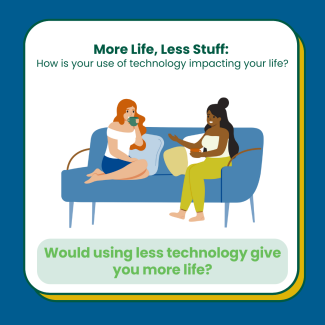
How is your use of technology impacting your life?
What & who matters most to you in life?
How much time are you spending on those things and with those people?
Is your relationship to technology interfering with your relationships with people?
Is the time you are spending with technology improving your life?
Would using less technology give you more life?
Are there things in your technology usage that aren't serving you or connecting you with what and who matters the most?
When looking at entertainment, are you having fun?
Part 2: How can you set limits on time spent in digital spaces?
I remember being baffled by my first smartphone. It kept blinking different colors, and I had no idea what that meant. I remember the day after I got it, the alarm went off in church, three times. I panicked. The phone was on silent. (Apparently, that is not what ‘silent’ meant.) There was no off button, and the guy at the store had turned it on. I had no idea how to stop it.
When I figured out why it was blinking — notifications from various applications aimed at convincing me to spend money — I was baffled again. There is nothing urgent about selling me something. I don’t need to be reminded to buy more stuff every five minutes. These days, I find having a phone constantly begging for attention is distracting, disruptive, and disorienting.
So, I deleted almost all store and restaurant apps. If I want to buy something online, I go through the browser. For the remaining apps, I went to the notification settings and told almost all the apps no notifications. I get a notification when my phone rings, when I get a text message, or when food items arrive. That’s it.
I became very concerned with the permissions each app was asking for, especially social media apps. My life isn’t dramatic enough to have digital intrigue. I don’t have anything to hide; it is the principle of the thing. So, I went through settings for apps that remained and revoked permissions for almost everything. If I didn’t know exactly why they would need that information, I told them no. Regularly auditing app permissions isn’t just important for mental health – it can be important for your cybersecurity.
Have you ever noticed that companies sign you up for random email lists? Over the years I have also become more picky about which marketing emails or text messages I allow. I have a specific email account for folks trying to sell me stuff, and I regularly unsubscribe to things that I don’t want.
We can also choose to periodically look at what data we’re saving and delete old files we definitely don’t need. I have shared hundreds of pictures on my social profiles over the years that, frankly, I have never looked at again, don’t matter to me, and don’t need to still be online. Sam McCracken, a doctoral student at the University of Michigan, studies “digital hoarding” – the indefinite saving of accumulated files, assisted by social media and other technologies, beyond the point when they serve any real social purpose. According to him, platforms like Facebook keep you hooked by periodically showing you these old posts again. While photos of old friends and major milestones are things I consciously want to save, pictures of a cup of hot cocoa I drank in 2015 are probably no longer serving me.
Automating Digital Boundaries
I also created boundaries to encourage healthy communication standards. For example, I don’t get work emails on my phone, and I don’t respond to work emails over the weekend or on vacation. I don’t answer any emails after 8 p.m. or before 8 a.m. Digital media scholar Melissa Gregg says that “consciousness of the always-present potential for engaging with work is a new form of affective labor that must be constantly regulated.” Basically, if I take emails on my off time, I am never mentally off work. I love my job. However, I am not the kind of writer who covers breaking news. If it is an actual emergency, you want to call 911. Otherwise, we can handle it in the morning.
As an educator, I also think it is important to model healthy boundaries for students. If a student emails me at 2 a.m. and I respond immediately, that encourages that student to wait up for me the next time they have a middle-of-the-night question. If they know I am not going to answer until the morning, perhaps they will go to bed.
Speaking of going to bed, I have a digital bedtime set as well. Most of the folks who have my phone number don’t need access to me 24/7. Many, many studies have shown that electronic media is terrible for your sleep in just about every possible way. At 11 p.m., my phone goes on ‘do not disturb,’ and it stays that way until 7 a.m. the next morning. For me, these boundaries have been developed over several years as my life and technology have changed.
At the end of the day, these small changes make a big difference in my everyday life. This is what works for me. As you are deciding what works for you, consider the following:
Who needs 24/7 access to you? Who doesn’t need that access?
Which notifications are helpful? Which are just interruptions?
Are the apps on your phone purposeful? Are there apps that you are not using or services that might be better accessed through a browser?
For the apps that remain, what permissions do they have? What kind of data are they collecting?
What data have your social profiles accumulated that you might not need? Do these unused files really need to be saved forever to help platforms draw you back in?
Who is looking at you to model healthy digital boundaries? How do your decisions about technology affect the people around you?
By Yuki Nakayama, Ecology Center Environmental Storyteller Rackham Fellow
"We need materials and production systems in harmony with nature so that we are not constantly playing catch up to remove toxins in our environment." -Jeff Gearhart (Ecology Center Research Director)
The 20th anniversary of the National Vehicle Mercury Switch Recovery Program (NVMSRP) is coming up! Since the 1990s, the Ecology Center has been working on projects to address the use of toxic chemicals in consumer goods, including automobiles. After releasing its landmark 2001 study on mercury in automobiles, Ecology Center led the campaign to create this long-lasting, successful federal program. (more on EC's past articles on Healthy Cars here).
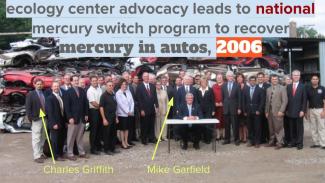
Ecology Center Director Mike Garfield and Climate & Energy Program Director Charles Griffith at a car recycler facility with other members of the NVMSRP
What Are Mercury-Containing Switches?
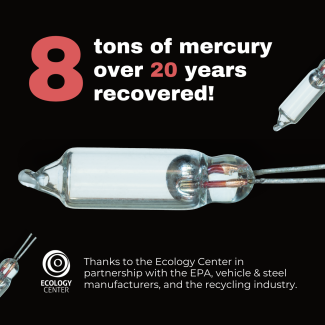
Mercury-containing switches are small glass capsules that contain about one gram of mercury (image below). They were used for decades to activate hood and truck convenience lights and as motion sensors for anti-lock braking systems. Non-mercury switch alternatives were always available for these applications, but were not commonly used in cars.
An Ecology Center-led campaign and legal pressure forced the auto industry to eliminate these switches in newly manufactured cars 20 years ago. However, this left millions of older vehicles with mercury switches that no one was taking responsibility for recovering.
What is the National Vehicle Mercury Switch Recovery Program (NVMSRP)?
NVMSRP is a voluntary nationwide agreement between the EPA, American Iron & Steel Institute, Automotive Recyclers Association, Ecology Center, Environmental Council of States, Environmental Defense, End of Life Vehicle Solutions, Institute of Scrap Recycling Industries, and the Steel Manufacturers Association to recover mercury switches from 2002 and older scrap vehicles before they are shredded for recycling. (Program establishment article from 2007)
They created a system and financial incentive by supplying prepaid collection buckets to be shipped to EPA warehouses. Participating automobile dismantlers are paid $1 per switch from a $4 million fund created by the industry. Mercury switches are small (roughly the size of an acorn), but each contains one gram or more of mercury.
Since 2006, over seven million mercury switches have been removed– the equivalent of roughly eight tons of mercury!
Why Should We Care?
Mercury is a dangerous neurotoxin that can cause serious health issues, such as developmental, neurological, behavioral, neuromuscular, cardiovascular, and immune system disorders. For example, inhaled as a vapor, mercury can cause tremors, memory loss, and muscle weakness. Mercury pollution threatens wildlife and can build up in the fish people eat. (more information on mercury and other toxins: Healthy Stuff Lab's Chemicals of Concern Article)
While Michigan banned mercury in thermometers in January 2002, it is still found in cars made in the 1980s and 1990s. Over 200 million mercury switches containing 250 tons of mercury were installed in vehicles before the project started in 2006. This means cars with mercury switches stayed on the road until they reached the end of their life cycle. Before this project, all car parts (including those with mercury) were shredded.
While coal-fired power plants are the #1 source of mercury pollution, emitting approximately 50 tons of mercury a year, car disposal was the third highest source of mercury emissions to the environment. As cars were disposed of, mercury pollution was released into our environment because a clean and safe system did not exist.
The NVMSRP is at the tail end of its project now that newer cars do not contain mercury switches. While not all of the mercury switches on the road were collected, the program successfully continued an important nationwide initiative for 20 years and created a large-scale project to address the disposal of products with toxic chemicals.
"A Product Design Disaster"
Jeff Gearhart, Ecology Center Research Director, described the issue as a “disaster in design,” stating that “They [manufacturers] weren’t thinking about the consequences or the lifetime of the products.” This led to the urgent need to develop a safe removal program to recover the millions of mercury switches out on the road.
The Ecology Center conducted survey reports exploring opportunities for public policy advocacy, market campaigns, and public exposure to ensure safe and healthy cars. The reports identified two key policy pieces: extended producer responsibility (to clean up the mess) and design responsibility, which clearly articulates the chemicals manufacturers cannot use (which sadly did not exist before the ’90s).
What is Extended Producer Responsibility?
Producer responsibility is about ensuring that manufacturers are held accountable through the entire life cycle of a product, not just its creation. This means requiring producers to bear the systemic and financial responsibility for the disposal process of the waste generated and addressing the environmental harm caused by their products.
In the case of mercury switches, the program started with the automobile and steel industry paying for prepaid buckets and collection payments. The initial incentive fund was exhausted in 2009, and the collection payments stopped, but the prepaid buckets continue to be provided through the program. Due to the automobile industry's reluctance to provide funding, the program was at risk of ending by 2017.
However, the steel industry decided to continue financially supporting the program, extending it through 2027 (press releases on program extension.)This is because Electric Arc Furnaces will face more regulations if they do not clean up mercury from steel scraps they process, creating an incentive for the industry to fund the mercury switch program. This highlights the challenge of ensuring the industry takes financial responsibility for using toxic chemicals in the absence of regulatory enforcement.
What is Design Responsibility?
Design responsibility is about getting to the source of the issue at the earliest stage possible in the production process. The NVMSRP successfully created a voluntary standard for the automobile industry to urge them to avoid specific chemicals in their products — a mixture of legal requirements, legislative efforts in individual countries, and voluntary efforts led by the industry. NVMSRP and many others have led to things like the Global Automotive Declarable Substance List, which requires suppliers to declare the use of certain chemicals and prohibits the use of the most toxic ones.
These efforts actively drive change in the supply chain so that toxic chemicals are not being used from the beginning rather than having to clean them up afterwards. It is important to note that many agreements are voluntary and not required, which is why we must continue to work to establish legislative requirements to hold the industry accountable for the products they design.
Lessons Learned from the Project
While the project removed over seven million switches (amounting to over seven million grams of mercury = eight tons) and limited mercury use in automobiles, there is still a long road ahead for clean and healthy cars.
Cars still have parts that contain PFAS, flame retardants, plastics, and other harmful chemicals, and the industry continues to face challenges in screening suppliers for hazards. For example, trifluoroacetic acid (TFA, a type of PFAS) is frequently used as a coolant in car air conditioners, even though safer alternatives, called "natural refrigerants," are available.
This means producer and design responsibility continues to be neglected as our cars are still produced using toxic and harmful materials. The same structural issues that the mercury switch recovery project faced are replicated across different toxic chemicals and industries.
Producer and design responsibility must be addressed in tandem to ensure that healthy products are created with imminent disposal in mind and to create a safe removal process for products already out in the world.
Alongside producer and design responsibility, the project identified other important principles that must be centered as we work towards a healthier world: better hazard assessments and green chemistry. There is an urgent need to develop better evaluation and screening tools built on an inherent hazard-based approach rather than waiting on long-term studies on individual chemicals. Some tools, such as Green Screen, help companies have better screening practices and alternatives at the design stage, but there is a need for more.
Better screenings also require more developments in green chemistry that can identify safer alternatives for manufacturers and consumers. However, a training gap is caused by the separation of scientific fields such as chemistry, environmental science, and toxicology, which are necessary for innovations in green chemistry. Funding for collaborative research across fields is urgently needed to expand our knowledge about materials.
Gearhart also stated, "We need materials and production systems in harmony with nature so that we are not constantly playing catch up to remove environmental toxins." Change is slow and gradual, but the mercury switch program shows us that it is never too late to act and that our collective effort is crucial to making big changes to ensure access to safe products.
What Can People Do?
Support extended producer laws in your state. Many states have bills regarding this key issue. In Michigan, House Bill 5902 was introduced in the House in 2024. Check out more information on the bill here.
Own fewer cars and use local public transportation. You can support local public and other fossil fuel-free forms of transportation projects. Check out programs like A2Zero, Adopt-a-stop, getDowntown, and D2A2 in Ann Arbor.
Support and advocate for urban city planning that relies on fewer cars and centers on more walking, biking, and public transit. Support local bills expanding public transportation, like MI House Bill 5769.
Donate to the Ecology Center and stay informed about the ongoing campaigns at the Ecology Center on PFAS, Lead, and Microplastics. Start by learning about our Healthy Stuff Lab and our most recent article about the retailer report card.