
By Trilby MacDonald, Ecology Center Writer
“Any power I make is power that does not have to move 30 miles from the power plant in Monroe, MI, to our house. Solar power reduces the stress on the grid.” — Dave Strenski, SolarYpsi
Michigan’s electric grid is showing its age. Power outages have increased 78% over the last two decades, and utilities are asking for up to $9 billion in rate hikes to pay for improvements. Locally generated renewable energy relieves strain on the grid, reducing the need for costly new infrastructure. But old rules prevent us from adopting modern solutions that lower energy costs and improve reliability.
For over a century, utilities have been rewarded for building big power plants and long transmission lines to bring power to communities while solar energy has struggled to gain support. “The electric grid is going through a profound transition, which is running into an outdated regulatory model … still mostly trapped into rewarding capital investments made by the utility rather than investments now being made by other clean energy companies, local governments, and everyday consumers,” says Charles Griffith, Director of the Climate & Energy Program at Ecology Center.
Across Michigan, community leaders and local energy advocates like Ecology Center are proving there’s a better way. With tools like rooftop solar, backup batteries, and pushing for smarter policies, they’re building a system that puts people first.
Putting People Over Profits
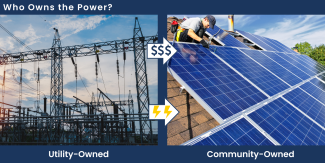
As long as profits depend on owning large assets, utilities will continue to resist clean energy solutions that give more control and value to consumers. As Brian Lydic, policy director at the Interstate Renewable Energy Council (IREC) explains, “Their main method of making money is not to exchange energy, but to put infrastructure in place and get a return on that investment through rates.” That return only comes when the utility owns the asset. “Utilities aren’t against clean energy, as long as they own it,” Lydic adds, “because if they own the assets, then they can reap the benefits of that investment.”
When residents and local governments take initiative, they can save money and improve reliability. Ann Arbor is moving forward with distributed energy solutions like the Sustainable Energy Utility (SEU,) an opt-in, supplemental service that works alongside DTE’s main grid, allowing residents to install city-owned solar and pay only for the energy they use. Soon, neighbors will also be able to buy energy from each other.
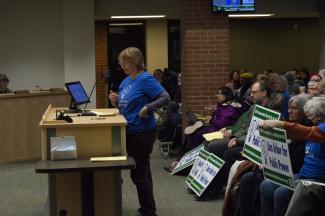
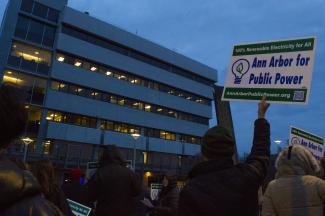
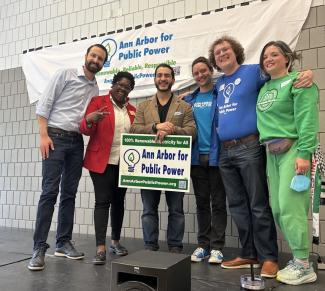
The advocacy group Ann Arbor for Public Power (A2P2) hopes to go further by pushing for a ballot initiative that would require the city to buy the local grid assets from DTE. This would make it possible to shift more quickly from fossil fuels to renewables, freeing residents from the profit motive that drives infrastructure spending. However, municipalization could cost hundreds of millions of dollars and involve a legal battle with DTE. Financing the initiative would likely involve selling bonds to pay for the infrastructure that would be repaid over time through rate savings.
Getting the Most from the Grid
Expanding the capacity of the existing grid will lower costs for residential and commercial electricity. To do that, utilities must prioritize investments in the local energy distribution system. Michigan’s grid has two main parts: the transmission system, which carries electricity over long distances, and the distribution system, which delivers power locally. Distributed energy resources include things like rooftop solar panels, backup batteries, and small wind turbines which produce and store electricity close to where it’s used, instead of relying on the transmission system.
Technologies like inverters, grid management software, and batteries are already helping local infrastructure handle more power. Soon, electric vehicle batteries will also be able to supply power to the grid. Lydic’s work with IREC pushes utilities to make the existing grid more efficient. “One study said we could get like 30% or more of our energy from distributed generation in the future,” Lydic notes. “The more of these energy resources you can put on the distribution system, the lower the cost overall for electrification of cars and heating and cooking and everything else.”
Changing the Game
If Michigan is to speed up its clean energy transition, it will require a broad coalition of residents, local governments, and state leaders to push for fairer rules, more innovation, and a grid that works for everyone. Ecology Center and other advocates are intervening in Michigan Public Service Commission (MPSC) proceedings to promote a cleaner grid that keeps rates down and ensures all communities benefit equally. The City of Ann Arbor and a volunteer group in Ypsilanti, SolarYpsi, are inspiring examples of what’s possible with local leadership and home-grown solutions. The challenge is making sure state policies and regulations allow space for new ideas to take hold.
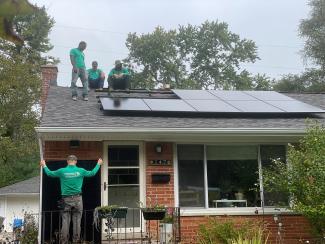
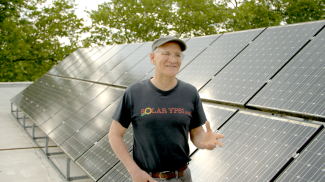
Dave Strenski is the founder of SolarYpsi, a group of volunteers that provide solar installations for city residents that reduce the cost of home solar by about a third. He says a common misperception is that solar power puts stress on the electrical grid. “This could not be further from the truth … Any excess power I generate and push back into the grid does not go back to the power plant but to the closest ground — my neighbor’s toaster,” Strenski explains.
Utilities are bent on keeping the current model, and making sure the process for customers to connect their own solar panels is slow and cumbersome. On top of that, they use their lobbying power to keep in place state laws that restrict or even ban certain types of local, customer-owned solar projects. These barriers make it harder for communities to take charge of their energy future.
A new coalition of groups — including Clean Water Action, Voters Not Politicians, and MOSES Action — is pushing a ballot initiative to ban political contributions from Michigan’s monopoly utilities like DTE and Consumers Energy. They argue utility money has blocked reforms to improve grid reliability and expand community solar. “These corporations aren’t just influencing policy — they’re writing it,” says Ponsella Hardaway of MOSES Action, in a July 1 article published by MLive. The coalition’s campaign, Michiganders for Money Out of Politics, aims to strip big utilities of outsized political sway and let voters decide who shapes Michigan’s energy future.
This type of pressure is exactly what’s needed to shift the paradigm.
“To really make an impact on anything, you need to intervene and be there at the table, submitting comments,” says Lydic. Boratha Tan of Vote Solar agrees: “"I think we need townships and cities to join the fight against utilities in these regulatory dockets; the current parties are mostly nonprofits, and there are limits to how well they can represent Michiganders. Only Ann Arbor has been a consistent presence in these dockets and pushing DTE. We need other cities and townships to take a seat at the table."
The real challenge, Griffith says, is that the regulatory structure doesn’t allow the MPSC to require utilities to do things differently. “Legislation would probably be required to change the model, but that also proves difficult given utility influence in Lansing, and the inertia of how it’s always been done,” he notes.
A Consumer-Driven, Equitable Grid
Together with municipal leaders, advocates like Ecology Center are calling for a new approach that requires:
- Fair compensation for distributed generation: Update net billing policies so residents and businesses are paid fairly for the clean energy they produce.
- Streamlined interconnection: Make it faster and easier for customers to connect solar panels, batteries, and other distributed energy resources to the grid.
- Support for community solar and microgrids: Enable neighbors to share locally generated power and build resilience together.
- Prioritizing consumer and community ownership: Give residents, businesses, and local organizations more opportunities to invest in and benefit from clean energy.
- Policy reforms to cap rate hikes and reward efficiency: Protect consumers from runaway costs and encourage smarter energy use.
Local Innovation Leads the Way
Michigan’s energy system must shift from utility-centered control to one focused on consumers. Distributed energy, smart policies, and strong community engagement can cut energy bills, reduce blackouts, and create economic opportunities. As new technologies like artificial intelligence rapidly drive up electricity demand, homegrown models offer a powerful blueprint for delivering the flexible, community-centered solutions that can be deployed quickly — ensuring that the benefits of the clean energy transition reach everyone.